Thinking in Public.

The work I do happens in private rooms. This page is the part that doesn't: talks, panels, and writing on organizational change, AI governance, technology risk, and negotiation. If you want to know how I think before we ever have a conversation, start here.

Roundtable

7CTOs · Nov. 2026

Recognizing the Real Issues Behind the Technical Problems

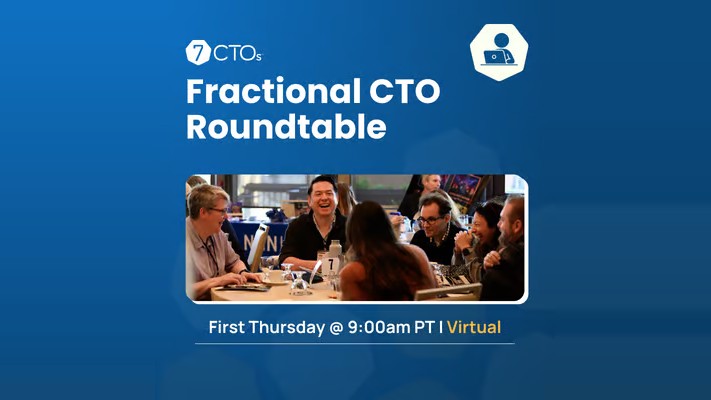
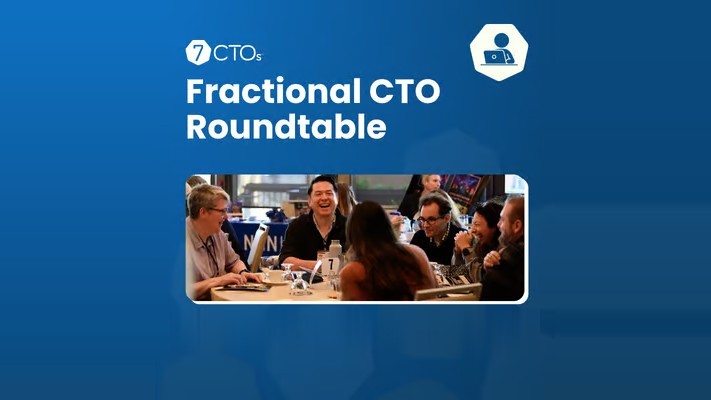
The second of three Fractional CTO Roundtables I'm leading for 7CTOs this fall, on the gap between the problem a client hires you to fix and the one they actually have. An architecture review turns out to be a leadership problem, an AI strategy a decision-making problem, engineering velocity a prioritization problem. We traded tells: how long it's been going on, tracing one decision end to end, reading the architecture as an org chart, and noticing who you're steered away from. Then what to do once you've found it: treat the symptom you were hired for, because that earns you the rest, and build the case before you challenge their diagnosis. The room's best addition was a check on ourselves: after enough of these, you walk in sure it isn't engineering's fault, and sometimes it is.

Panel

Hacking HR · Nov. 2026

AI@Work: What We Got Right and What We Didn't

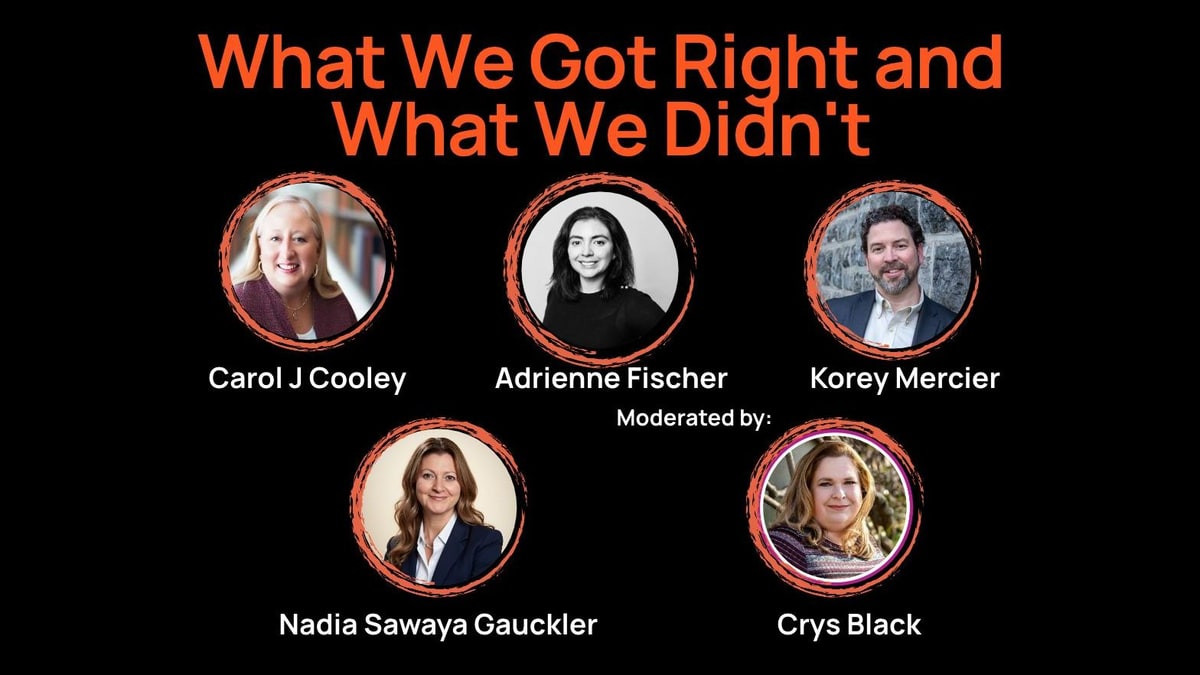
The capstone of Hacking HR's AI@Work series, and my fourth seat on its panel this year, with Nadia Sawaya Gauckler, Carol J Cooley, and Adrienne Fischer, Crys Black moderating. Crys opened by calling back my line from May: if employees aren't told what they can and can't do with AI, they'll make it up. That held, but agents now make it up faster and don't ask permission, so a policy that lists approved tools breaks the moment fifteen other departments pick their own. Set minimum requirements instead: what a tool can do, what it can reach, who owns it, and what happens when it breaks. On agents, the manager is whoever set one up, and because agents run on their own credentials they keep running after that person leaves, so HR's offboarding checklist now has to ask who owns them. A guardrail tells an agent what it shouldn't do; an access control is a wall it can't get past. My close: an inventory of every tool and agent that touches people decisions, each with a named owner and someone who can stop it.

Talk

AI Practitioners Summit · Oct. 2026

Finding the Collisions Before the Rollout

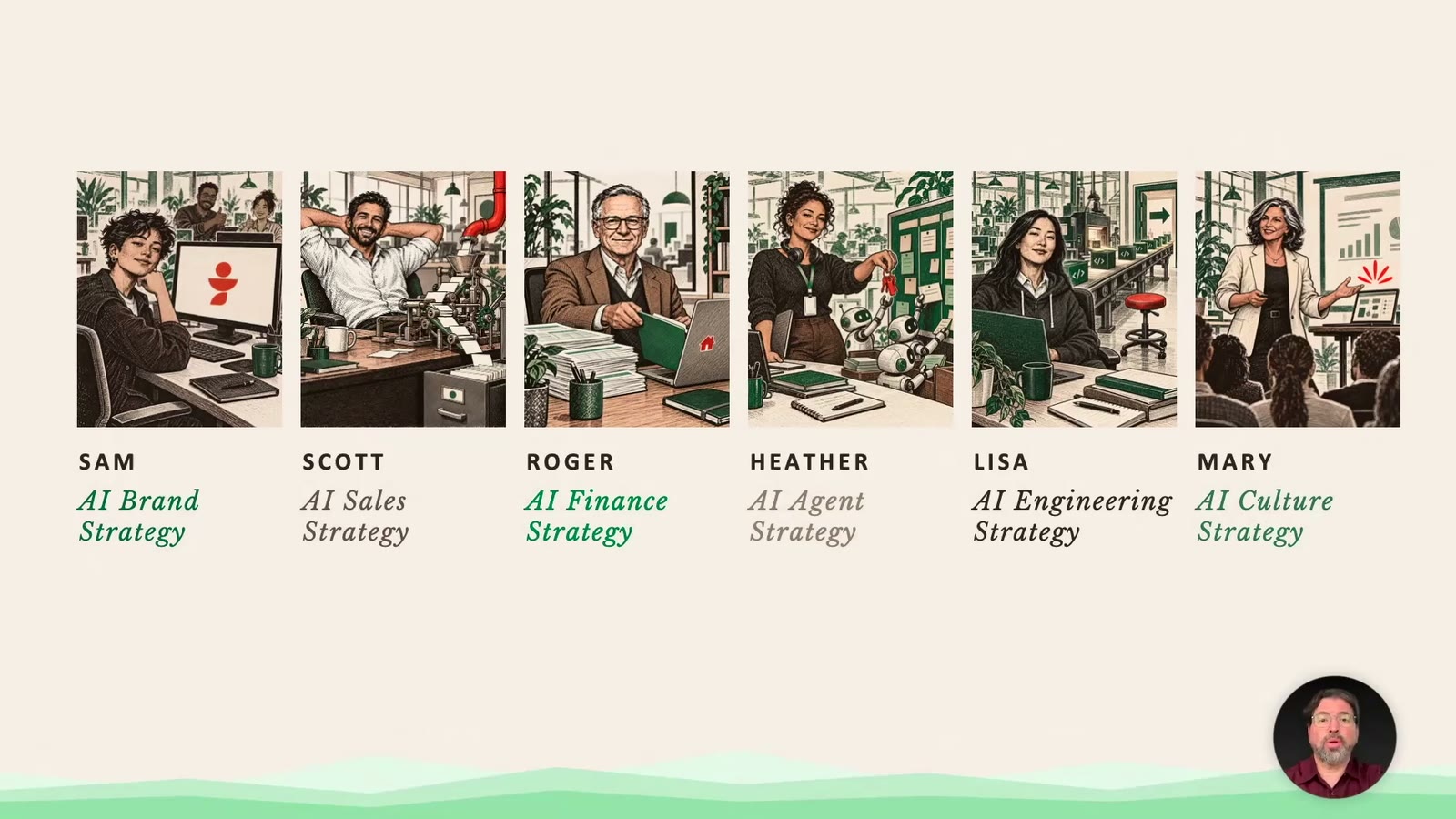
A sixteen-minute session recorded for a five-day virtual summit of AI consultants, agency owners, and founders. Six smart people, six AI strategies, one company. If you implement AI for a living, that company is probably your client. This cut is for the people doing the rollout: five questions to ask in the first meeting, what a good answer sounds like, and how to raise them without losing the engagement.

Panel

Operators Guild · Oct. 2026

AI Risk and Governance for Operators

I joined Bryan Kaplan, CI&SO at Juvare, for an Operators Guild Focus Session that Brittany King moderated. We covered finding the AI a company is already using and what governance looks like for a lean team. We also covered why access controls matter more than guardrails: what a tool can't do counts for more than what it won't. The audit only works if people feel safe telling you what they use.

Roundtable

7CTOs · Oct. 2026

How Do the First 30 Days Look Now

The first of three Fractional CTO Roundtables I'm leading for 7CTOs this fall, on what a new client's first month looks like now. We started with the groundwork before day one: who hired you, and who didn't. Then two weeks of listening and mapping the real influencers, and echoing back what you heard before recommending anything. The room's best addition: size an AI tool's blast radius before anyone deploys it.

Podcast

RAMai Solutions Podcast · Oct. 2026

Why Brilliant Leaders Fail Without Alignment

Ross McKenzie had me on the RAMai Solutions Podcast. We covered where the name Herding Wolves came from, and what a leadership team looks like when everyone agrees at the table and takes the real conversation to Slack. We also covered why the problem a leader can see usually sits several layers above a lack of trust. Then shadow AI, and why I won't connect an LLM to my own email.

Panel

Hacking HR · Sep. 2026

AI@Work: Augmentation, Displacement, and the Trust Gap in Between

Third session in Hacking HR's AI@Work series, and the one that moved from the tools to the people using them. Leadership says augmentation; employees hear displacement, and a live poll put nearly half the room in both camps at once. I took the infrastructure seat: what these tools actually measure, why usage metrics mislead the managers reading them, and why the first decision is which tools you choose, allow, and support.

Panel

Colorado Startup Week · Sep. 2026

Your First Executive Team Might Be Fractional

My third time on the fractional panel, this one at Colorado Startup Week for about thirty founders and operators, with Crys Black moderating. The question was how to get executive judgment before you can afford executive payroll: when a fractional leader beats a full-time hire, how to structure the engagement, and how to hire the right one. I took the technology seat: the point where the business and the technology start to drift apart, why AI can't stand in for judgment, and why equity is a lottery ticket for a fractional.

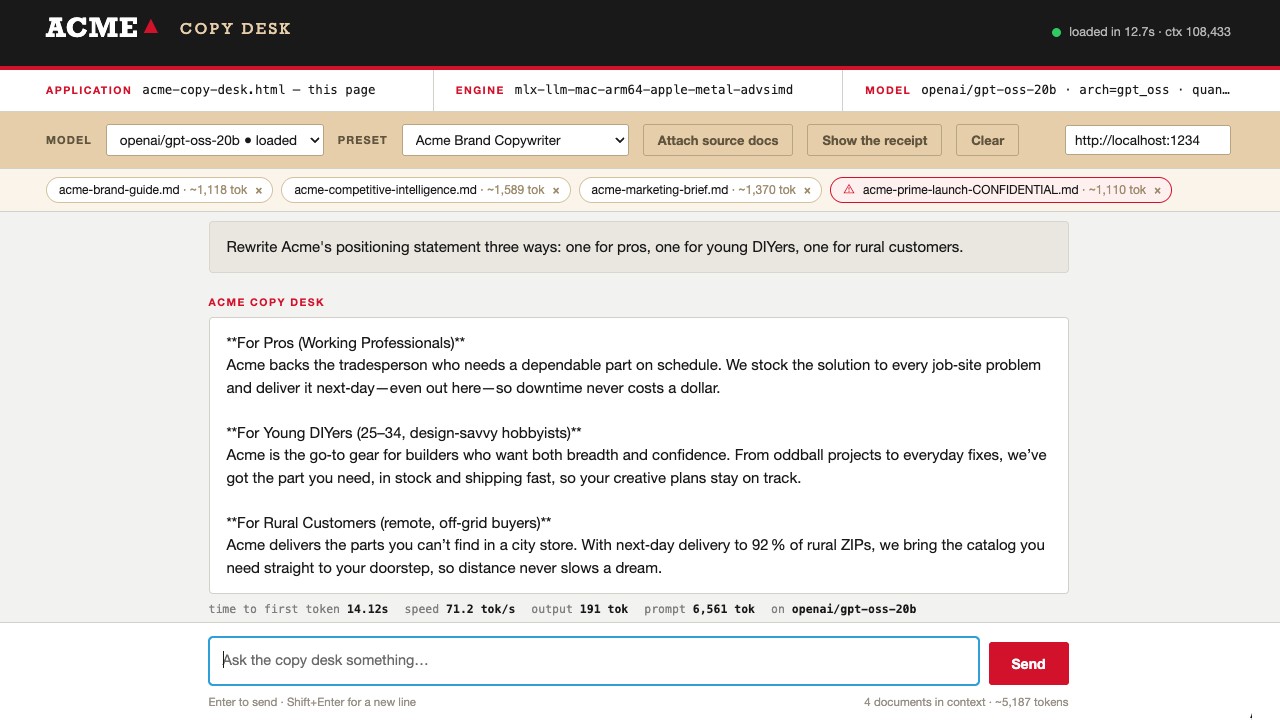
The Acme Copy Desk demo app from the talk: a chat front end calling a local model through LM Studio on localhost, with source documents attached and a per-response receipt

Talk

AI Marketing Forum · Sep. 2026

Running AI Locally: What It Is, Why It Matters, and When to Consider It

An encore of the July talk for the AI Marketing Forum, delivered virtually. The fear of models “calling home” is legitimate, but it's aimed at the wrong layer of the stack. I covered what actually changes when you run AI on hardware you control and the five business questions that decide whether you should. The live demo was a small copy-desk app hitting a model on a laptop with no cloud in the loop.

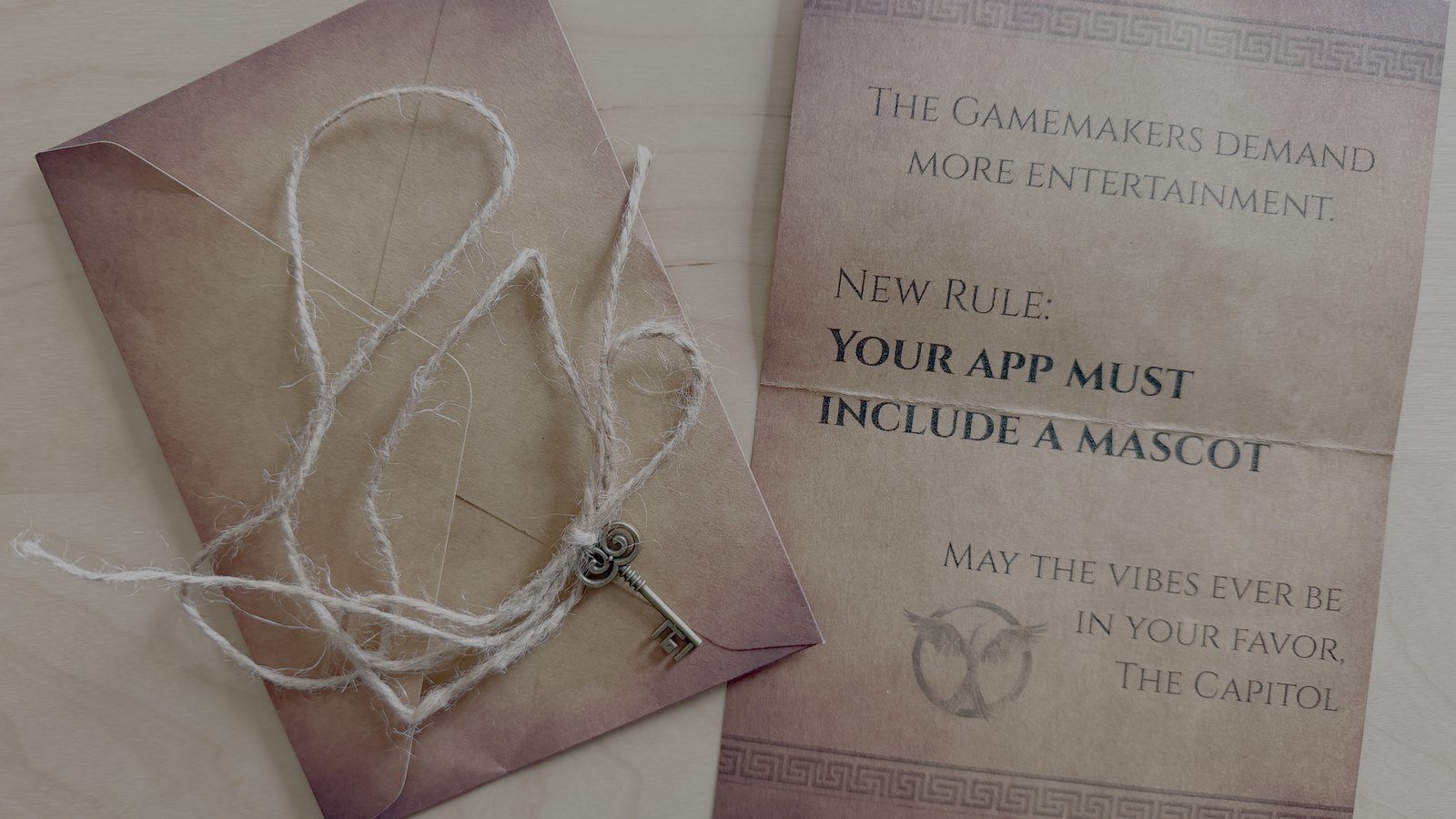
The sealed envelope and card from The Vibe Games: 'The Gamemakers demand more entertainment. New rule: your app must include a mascot.'

Tribute

RMAIIG Product Subgroup · Aug. 2026

The Vibe Games: Panem et Circenses

Forty-five minutes to build something live while the Gamemakers changed the rules as I went. The crowd asked for an homage to The Oregon Trail, set in space, and The Mizar Trail was born. Then a sealed envelope arrived, handed to me alone: add a mascot, mid-build. I read it out loud. Blue the Space Ox joined the crew. In most companies, that envelope never gets read to the room.

Panel

Hacking HR · Jul. 2026

AI@Work: Bias, Trust, and Transparency

Second in Hacking HR's AI@Work series, on bias in hiring, performance, and pay tools. The panel covered third-party audits, Colorado's reconsidered AI law, and shared liability between vendors and employers. When a vendor says the model is proprietary, usually nobody on the customer-facing side actually knows how it works. HR picks the tool, IT inherits it, and nobody is in the room at the moment that matters.

Talk

RMAIIG Marketing Subgroup · Jul. 2026

Running AI Locally: What It Is, Why It Matters, and When to Consider It

The fear of foreign models “calling home” is legitimate, but it's aimed at the wrong layer of the stack. The talk covers what changes when an organization runs AI on hardware it controls: privacy, cost, model provenance, and who owns the guardrails when there's no cloud vendor in the loop.

Panel

Hacking HR · May 2026

AI@Work: Governance & Accountability in HR

First in Hacking HR's AI@Work series, alongside HR and legal voices. It opened on a poll: who owns AI governance when it affects people? In most companies, nobody clearly does. My part was the line between what IT can govern and the business decisions it gets blamed for. I also gave a warning: if employees aren't told what they can do with AI, they'll make it up.

Panel

Boulder Startup Week · May 2026

Your First Executive Team Might Be Fractional

A panel of fractional executives on how early-stage startups get executive-level leadership long before they can afford executive-level payroll. We covered when founders are actually ready for it, which functions matter most at each stage, and how fractional leaders de-risk the full-time hires that come later. I was the technology voice, on fractional CTO/CIO leadership through the jump from traction to real scale.

Why Smart Leaders Compromise Themselves Under Pressure – 88 Owls Negotiations Alumni talk

Talk

88 Owls Alumni · Apr. 2026

Why Smart Leaders Compromise Themselves Under Pressure

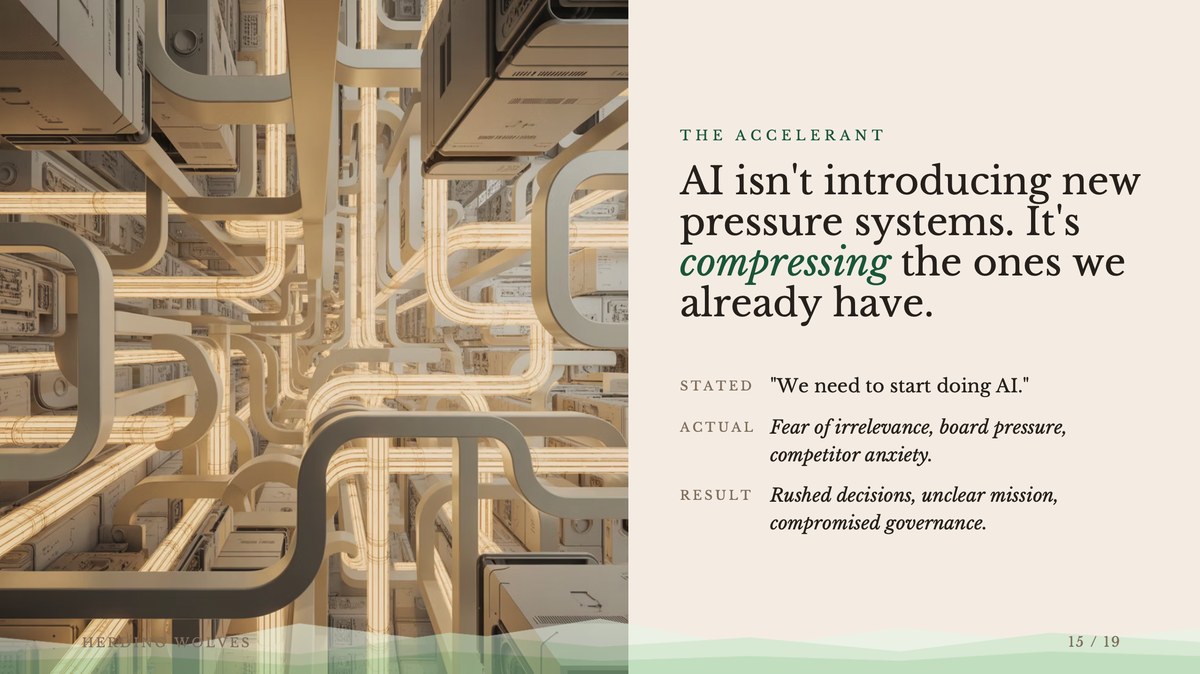
Capable leaders don't make bad compromises because they don't know better. They compromise because pressure changes how they decide. A talk for negotiation-trained alumni on the fear, obligation, and guilt (FOG) that cloud high-stakes decisions, how bias turns into a coping mechanism when the stakes rise, and why AI is compressing the pressure systems companies already had.

Talk

AI Pioneers Club · Oct. 2025

Model Context Protocol: Connecting AI Tools to Your Pack

A working session on the Model Context Protocol, the open standard Anthropic released to be the 'USB-C for AI.' It collapses the tangle of custom tool-to-data integrations into one shared language. I covered what MCP is and why it matters for an integration strategy, then gave a live demo connecting an AI assistant to local files and APIs through MCP servers.

Panel

Colorado Startup Week · Sep. 2025

What's a Fractional, Anyway? How Part-Time Executive Leaders Drive Full-Time Results

A panel on what fractional executive leadership actually is, when it makes sense for a growing company, and what founders should expect from a part-time leader with full-time accountability. The panel spanned sales, marketing, finance, operations, HR, legal, and IT. I was the technology voice, with stories of how fractional work actually gets done.

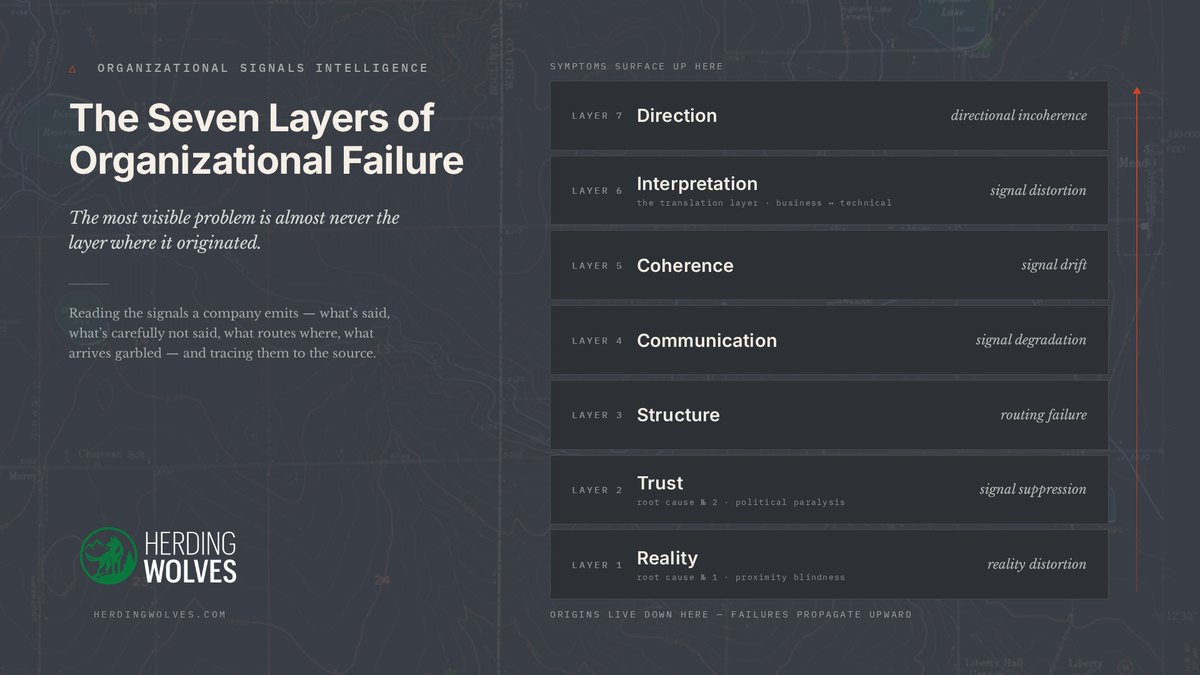
The Seven Layers of Organizational Failure – the OSI stack from Direction down to Reality

Article

LinkedIn · Jul. 2026

The Seven Layers of Organizational Failure

Organizations don't fail all at once – they fail in layers. I took the seven-layer networking model from the first half of my career and repurposed it for reading companies. The visible breakdown is priorities that won't hold and decisions made twice. It usually started at least two layers lower, often in trust. The companies that struggle longest keep fixing the layer they can see.

Interview

The CIO Circle · Apr. 2025

CIO Interview Series: Korey Mercier

A long-form Q&A for The CIO Circle's interview series: the path from writing code to advising founder-led companies, why the technology leader's job keeps turning into translation, and the advice that survived thirty years – be the leader your people are willing to talk to, no matter how difficult the topic.

Recognize your company in any of this?

Most of what I write about, I write about because I keep seeing it. If it sounds familiar, that's usually worth a conversation.

  • Scaling Rackspace Email: Moving a Monolith Toward NServiceBus

    Particular Software · 2014

    From the archives: a published testimonial on leading Rackspace Email's move away from a monolithic codebase – developer scalability, lower coupling, and consistency at scale. Still cited by Particular Software a decade later.

  • Presentation: Email Abuse from the Cloud

    M³AAWG · 23rd Meeting, Paris · 2011

    From the Rackspace Email years – how a large cloud email provider kept spam and viruses out of customer inboxes and protected deliverability at scale, and the technologies and partners behind it.